
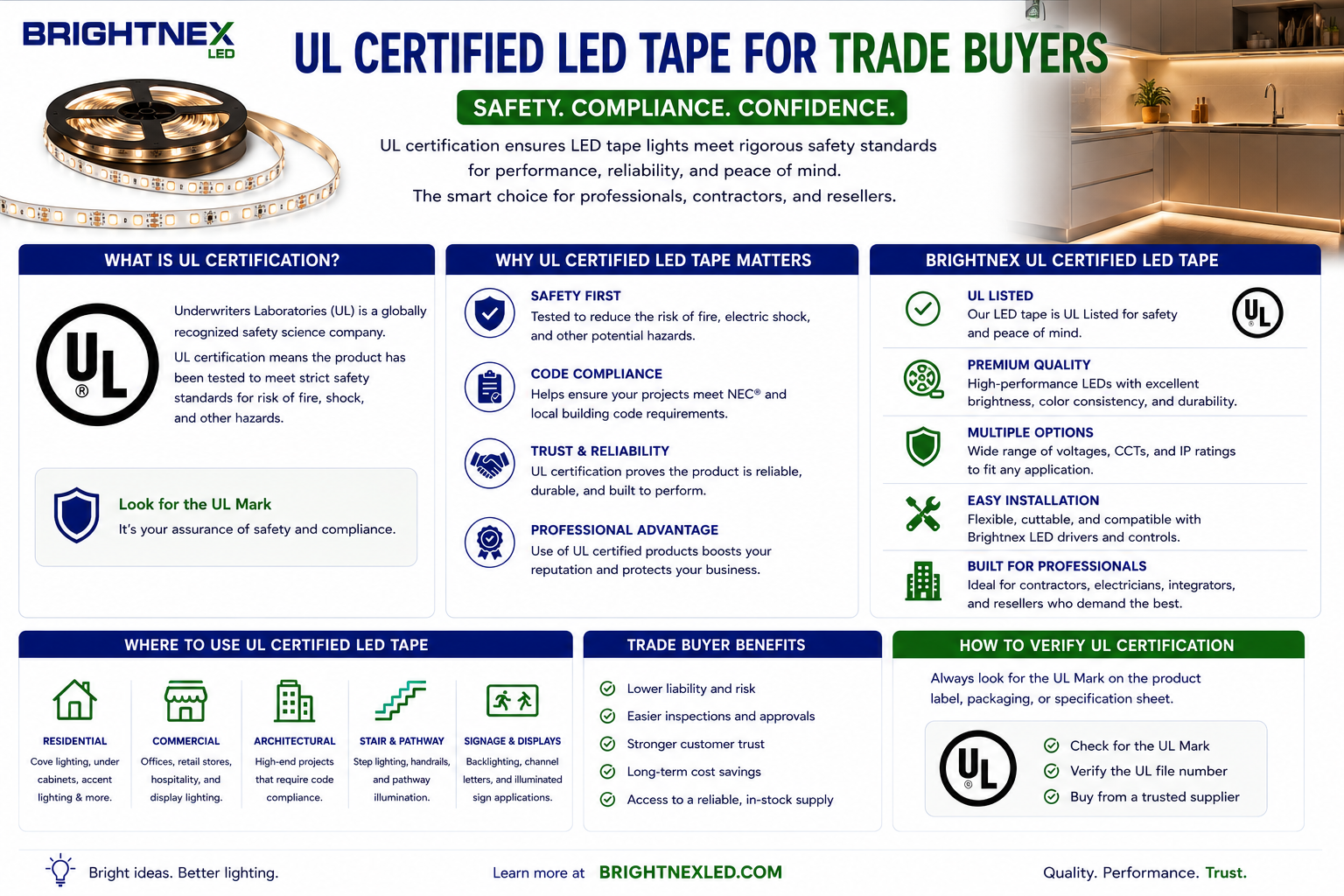
A spec sheet can say a lot, but on a real jobsite, one question usually cuts through the rest: is the LED tape actually certified for the way it will be installed? For electricians, lighting dealers, and project buyers, UL certified LED tape is not a marketing extra. It is part of risk control, inspection readiness, and long-term system reliability.
That matters even more on projects where the tape light is going into millwork, coves, stair details, outdoor kitchen features, or luxury residential applications where failures are expensive and callbacks are unacceptable. If the product, driver, and installation environment are not aligned, the clean finish at turnover can become a problem six months later.
Why UL certified LED tape matters on professional jobs
At the trade level, certification affects more than compliance language. It influences how confidently a product can be specified, how smoothly an inspection moves, and how much trust a contractor can place in the full lighting system. When tape light is installed in homes with premium finishes or in commercial spaces where service access is limited, safety certification becomes part of the buying decision, not an afterthought.
UL certified LED tape helps reduce uncertainty because the product has been evaluated against recognized safety requirements. That does not mean every certified tape is equal, and it does not replace proper installation practice. It does mean the tape belongs in a professional conversation about code, reliability, and compatibility.
For distributors and contractors, there is also a business reason to care. Certified products are easier to present to architects, builders, and end clients who expect documentation, consistency, and fewer surprises. On larger orders, that can save time during submittals and procurement, especially when the buyer needs a repeatable solution across multiple rooms or multiple properties.
What buyers should verify beyond the UL mark
A UL mark on the tape itself is a strong starting point, but professional buyers know that tape light is part of a system. The strip, driver, controls, connectors, and mounting method all affect performance. If one part is mismatched, certification alone will not fix flicker, voltage drop, heat buildup, or premature failure.
The first checkpoint is strip format and application fit. Tape width matters when the project includes tight channels, shallow profiles, or narrow reveal details. A supplier offering 6.5 mm, 8 mm, 10 mm, and 12 mm COB options gives buyers more control over field conditions and finish requirements. On high-end projects, that flexibility is often the difference between a clean installation and a redesign in the shop.
The second checkpoint is output type. Not every project needs the same tape. Static white may be right for undercabinet or cove lighting. CCT tape may be better when tunable white is part of the lighting design. RGB, RGBW, and IC RGB products serve a different purpose and need controls and power planning that match the system. A wholesale buyer should expect clear technical documentation for all of it.
The third checkpoint is environment rating. Dry, damp, and wet-location use are not interchangeable. If the tape is going into a vanity area, patio detail, outdoor bar, or spa-adjacent application, the full system needs to be selected around that exposure. That includes the driver enclosure, the junction box arrangement, and any profile or lens that affects protection and heat management.
UL certified LED tape and driver compatibility
One of the most common jobsite problems with LED tape is not the strip itself. It is driver mismatch. A premium strip will still perform poorly if it is paired with the wrong dimmable power supply or loaded incorrectly.
Trade buyers should evaluate the tape and driver together from the start. Dimming protocol matters. TRIAC, ELV, MLV, and 0-10V all behave differently in the field, and the choice depends on the controls already specified, the project type, and the expected dimming performance. In luxury residential work, low-end dimming quality and flicker control are usually under more scrutiny than basic on-off function.
It also pays to look at location rating on the power side. Drivers with junction boxes for wet, damp, and dry locations simplify professional installation and help keep the system aligned with real-world site conditions. That is especially useful when contractors need one dependable sourcing partner for both tape and power components instead of piecing a system together from multiple vendors.
Load planning is another area where experienced buyers pay attention. Leave room in the driver capacity rather than maxing it out. Plan for run length, brightness loss over distance, and any controls that may affect performance. On larger homes and custom projects, these details separate a stable lighting system from one that creates service calls.
Where certified tape lighting adds the most value
The value of UL certified LED tape becomes very clear in spaces where the lighting is integrated into architecture. Cove lighting, toe-kick lighting, undercabinet runs, shelves, mirror surrounds, stair lighting, and recessed channels all rely on a product that can disappear visually while performing consistently.
In high-end homes, the expectation is simple: no visible diode imaging where it should be smooth, no color inconsistency from one area to another, and no dimming issues when the home automation or wall controls are engaged. COB and SCOB formats are often preferred here because they produce a more continuous line of light, particularly when paired with quality aluminum profiles and diffusers.
Retail and showroom environments also benefit from certified tape solutions, but the priorities shift slightly. There, uptime, replacement consistency, and ease of sourcing matter more because maintenance schedules are tighter and display lighting changes more often. A wholesale supplier with stable inventory and standardized specifications can make repeat purchasing much easier.
For outdoor and semi-exposed use, the value is even more practical. Buyers need confidence that the selected tape and power components are suited to the environment and that installation accessories will support that rating. Certification supports the decision, but the right product family and technical support are what keep the system working after installation.
How trade buyers compare suppliers
For professional buyers, price always matters, but tape light purchasing is rarely about the lowest line item. It is about landed value. That includes product consistency, certification clarity, dimensional options, dimming support, accessory availability, and how likely the system is to perform without issue.
A supplier focused on the US trade market should be able to support professional requirements without forcing buyers to compromise on specification. That means a catalog built around real applications, not just generic strip light listings. It also means nationwide supply, dependable stock, and products that are clearly positioned for electricians, lighting stores, and project procurement teams rather than casual retail buyers.
This is where a specialized wholesale source stands out. If the tape carries the UL logo on the product, the strip widths match common profile needs, and the driver lineup covers practical dimming scenarios, the buyer spends less time solving preventable compatibility issues. On premium projects in markets like Los Angeles, that efficiency matters because schedules are tight and finish standards are high.
BrightNex LED fits that model by serving trade buyers with certified strip lighting systems, dimmable driver solutions, and product options suited for both everyday installs and luxury residential work.
Buying UL certified LED tape with fewer surprises
The safest buying approach is to think in terms of the full installation. Start with the application, then confirm strip type, width, color requirement, run length, environment rating, profile fit, driver type, and control method. If one of those pieces is vague at ordering time, the risk usually shows up later in labor.
A good supplier should make that process easier, not harder. Clear specs, consistent product families, and practical wholesale support are what professional buyers need when ordering in volume. That is true whether the project is a single custom residence, a lighting store restock, or a multi-room installation package.
UL certified LED tape earns its place on professional jobs when it is backed by the right system design and supplied by a partner that understands trade requirements. When the certification, compatibility, and field performance all line up, the result is simple: cleaner installs, fewer callbacks, and lighting that looks right the first time.