
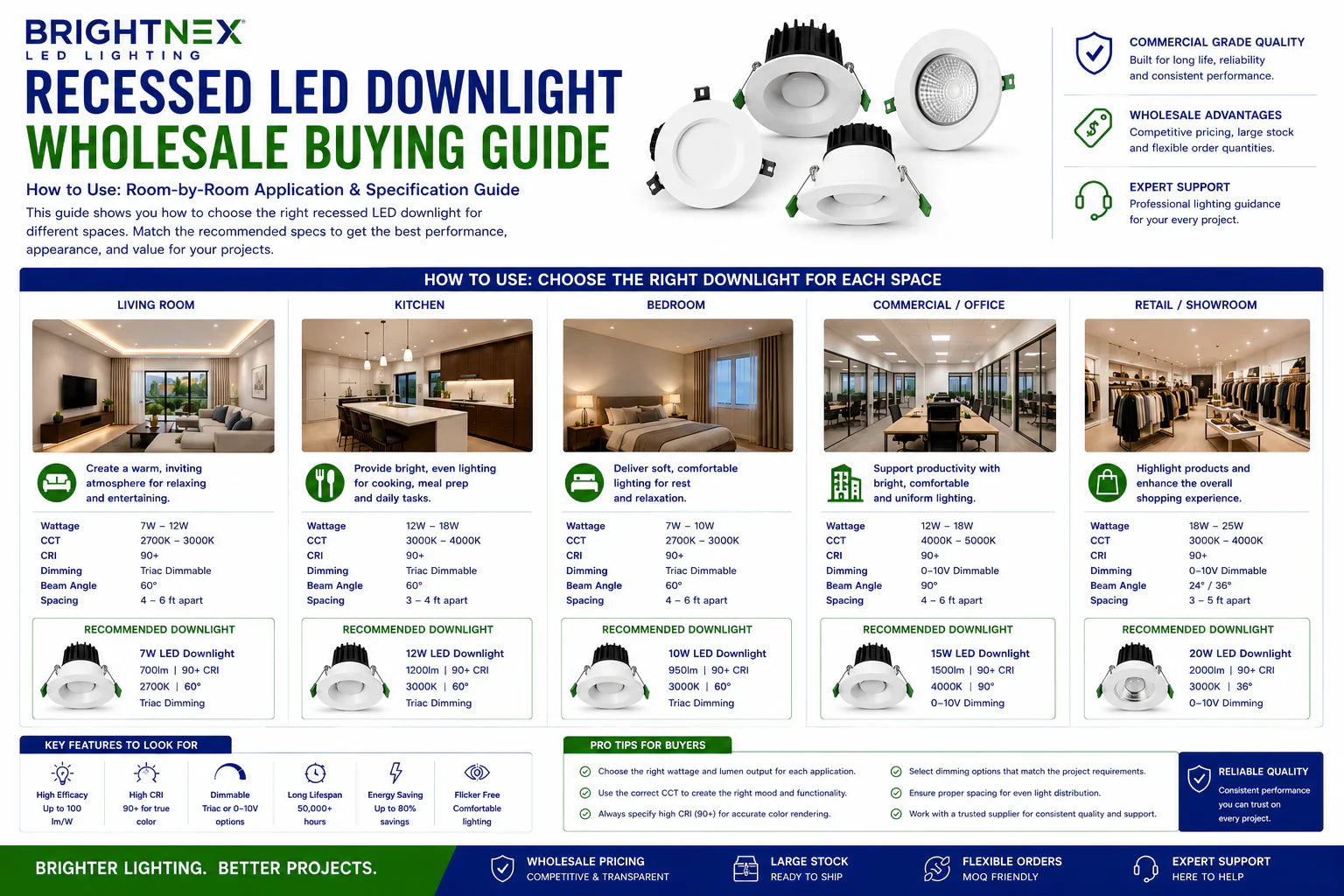
Why Recessed LED Downlight Selection Matters
Recessed LED downlights have become a standard fixture in modern residential and commercial construction. From luxury homes and retail spaces to hospitality projects and office environments, they provide clean ceiling aesthetics while delivering efficient illumination.
For contractors, electricians, lighting stores, and project buyers, wholesale purchasing is not simply about reducing fixture cost. The real goal is securing products that install efficiently, pass inspection, dim properly, and maintain consistent performance across multiple projects.
The wrong fixture can create installation delays, dimming issues, and expensive callbacks long after the job is complete.
Why UL Certification Should Be the First Filter
Professional buyers should always begin with certification.
UL-listed recessed LED downlights help support:
• Inspection approval
• Code compliance
• Project specifications
• Contractor confidence
In luxury residential and commercial environments, certified fixtures are often expected rather than optional.
Certification also provides buyers with greater confidence that the fixture has been evaluated for safety and long-term performance.
Why Dimming Performance Matters
Many downlights advertise dimming capability, but real-world performance can vary significantly.
Common dimming issues include:
• Flickering
• Dropout at low levels
• Buzzing
• Inconsistent dimming curves
• Uneven performance between fixtures
For premium projects, smooth dimming is just as important as brightness.
Professional buyers should verify compatibility with common dimming systems such as:
• TRIAC
• ELV
• MLV
• 0-10V
The fixture and driver must work together properly to achieve reliable performance.
Why Finish Quality Affects Customer Satisfaction
Downlights may appear simple, but clients notice fixture quality immediately after installation.
Elements that affect the finished appearance include:
• Trim design
• Paint finish
• Lens quality
• Beam consistency
• Housing construction
In luxury homes and high-visibility commercial projects, small quality differences become highly visible once ceilings are complete.
Higher-quality fixtures help create a cleaner and more professional finished result.
Why Low Price Alone Can Be Expensive
Wholesale purchasing based solely on fixture cost often creates problems later.
Potential issues include:
• Color inconsistency between batches
• Variable cutout tolerances
• Poor dimming performance
• Premature failures
• Increased service calls
Experienced buyers evaluate total project cost rather than unit price alone.
That includes:
• Material cost
• Installation labor
• Callback risk
• Customer satisfaction
A fixture that installs smoothly and performs reliably often delivers greater value than a lower-priced alternative.
Key Specifications Buyers Should Verify
Before placing a volume order, professional buyers should confirm:
• Cutout size
• Housing depth
• Lumen output
• Color temperature options
• Beam angle
• IC rating (if required)
• Damp or wet location suitability
• Dimming compatibility
Reviewing specifications early helps prevent installation issues and change orders later.
Consistency across future orders is equally important for contractors and distributors managing repeat projects.
Choosing the Right Trim Style
Different trim styles serve different design goals.
Common options include:
• Smooth trim downlights
• Baffle trim downlights
• Regressed downlights
• Wafer-style downlights
Luxury residential projects often favor designs that blend seamlessly into the ceiling while minimizing glare.
The right trim style depends on the architectural intent and lighting requirements of the space.
Matching Output to the Application
More lumens are not always better.
Different environments require different lighting levels.
For example:
• Kitchens often benefit from higher output
• Hallways may require moderate illumination
• Bedrooms typically need softer lighting
• Media rooms often require controlled brightness
Selecting the proper output helps improve visual comfort while supporting the overall lighting design.
Why Driver Quality Is Critical
The driver is one of the most important components inside a recessed LED downlight.
A high-quality driver helps deliver:
• Stable light output
• Smooth dimming
• Longer lifespan
• Reduced flicker
• Consistent performance
Poor driver design is one of the most common causes of fixture failures and customer complaints.
Professional buyers should evaluate driver quality with the same attention given to fixture appearance.
Why Inventory Consistency Matters
Wholesale buyers frequently manage projects over extended periods.
A reliable supplier should provide:
• Consistent specifications
• Stable color temperatures
• Matching trim finishes
• Predictable inventory availability
If products change unexpectedly between orders, installation consistency becomes difficult and customer confidence can suffer.
Reliable inventory is often just as important as fixture performance.
Why Luxury Residential Projects Demand Better Fixtures
Luxury homes place greater demands on recessed lighting systems.
These projects often combine downlights with:
• Architectural strip lighting
• Cove lighting
• Under-cabinet lighting
• Layered dimming scenes
• Smart lighting controls
In these environments, downlights must integrate seamlessly into both the architecture and the control system.
Small flaws that may be ignored in standard projects become highly noticeable in premium residential spaces.
How to Evaluate a Wholesale Supplier
The best suppliers provide more than pricing.
Professional buyers should evaluate:
• Certification support
• Technical knowledge
• Inventory reliability
• Dimming guidance
• Product consistency
• Shipping performance
A supplier that understands installation requirements can help reduce project risk and improve long-term success.
Who Benefits Most from Wholesale Purchasing?
Wholesale recessed LED downlight programs offer advantages for:
• Electrical contractors
• Lighting dealers
• Builders
• Remodelers
• Project procurement teams
Volume purchasing helps improve pricing while supporting consistent specifications across multiple projects.
For professionals managing repeat installations, standardization can significantly improve efficiency.
Conclusion
Recessed LED downlight wholesale purchasing should focus on performance, compatibility, certification, and reliability rather than price alone.
The best fixtures install easily, dim smoothly, pass inspection, and maintain a consistent appearance across multiple projects. By evaluating certification, driver quality, trim construction, and supplier reliability, professional buyers can reduce risk while delivering better lighting results.
FAQ
Why is UL certification important for recessed LED downlights?
UL certification helps support safety compliance, inspection approval, and professional project requirements.
What causes recessed downlights to flicker?
Flickering is often caused by poor driver quality or dimmer compatibility issues.
Are all dimmable downlights compatible with every dimmer?
No. Compatibility should always be verified before installation.
What trim style is best for luxury residential projects?
Smooth trim and regressed downlights are often preferred because they provide a clean appearance and improved glare control.
Why do professional buyers focus on driver quality?
The driver directly affects dimming performance, reliability, lifespan, and overall fixture performance.