
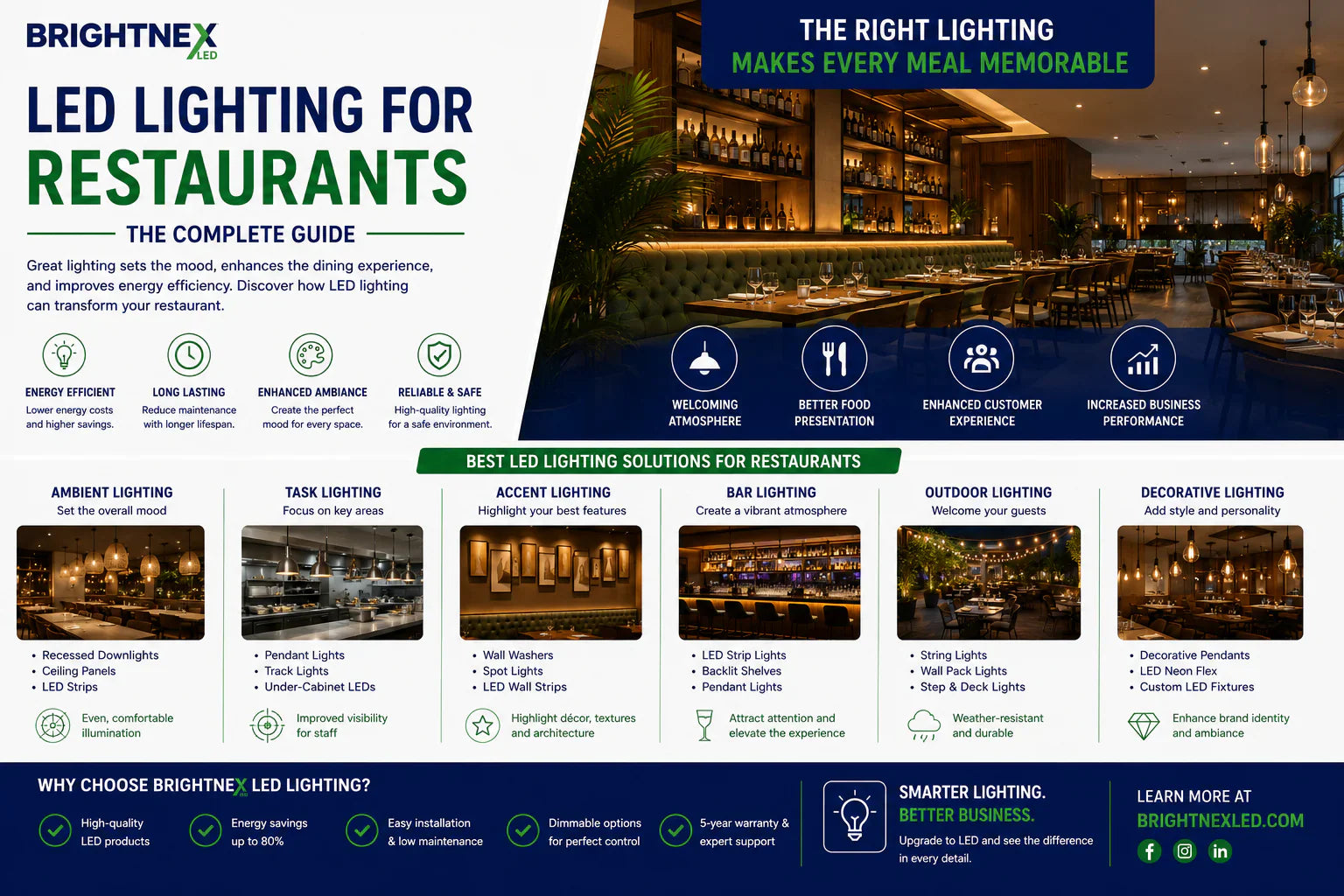
What good restaurant lighting actually needs to do
The first mistake in restaurant projects is treating the whole space as one lighting environment. It never is. A dining room, open kitchen, host stand, bar back, patio, and restroom all need different light levels and often different fixture types. When one fixture family is forced across every zone, the result is usually a compromise that looks acceptable nowhere.
Good restaurant lighting starts with layered light. Ambient lighting carries the room. Accent lighting adds focus to tables, artwork, shelves, or architectural details. Task lighting supports staff efficiency in prep areas, POS stations, and service counters. Decorative lighting helps define brand identity, but it should not be expected to do all the work.
For trade buyers, this matters because fixture selection affects everything downstream - driver sizing, dimming method, install time, replacement strategy, and long-term reliability. A project that looks clean on paper can become expensive fast if the lighting package is not technically aligned.
LED lighting for restaurants complete guide to fixture selection
In most restaurant projects, recessed downlights are the base layer. They deliver clean ceilings, dependable general illumination, and easy zoning when laid out correctly. Beam spread matters here. A narrow beam can create hot spots over tables and dark pockets between them, while a beam that is too wide can flatten the room and reduce visual contrast.
LED strip lighting is where many restaurants gain their visual edge. Under-bar illumination, toe-kick lighting, cove details, booth backlighting, shelving, and millwork accents are all strong applications for strip systems. For premium finishes, COB and SCOB strip lights are often a better fit than standard tape because they reduce dotting and deliver a cleaner line of light. In visible installations, that difference is not minor. It changes how polished the space feels.
Aluminum profiles also deserve more attention than they often get. In restaurant work, they improve heat management, protect the strip, and produce a more finished appearance. They also help control glare, which is a major issue when strips are installed at eye level near seating or reflective materials.
Color-changing products can work in restaurants, but only in the right concept. RGB, RGBW, CCT, or IC RGB solutions are useful for hospitality spaces that shift mood across dayparts or support branded event settings. But many operators do not need color-changing light everywhere. In a casual fine dining space, static white with proper dimming often performs better than a system with extra features that staff rarely use.
Color temperature and CRI decide how the room feels
Restaurant buyers often focus on brightness first. Guests usually notice color quality first, even if they do not describe it that way. Food, skin tones, wood finishes, stone surfaces, and upholstery all respond differently depending on the LED specification.
For most dining rooms, warm white temperatures are the safer choice. Around 2700K to 3000K typically creates a more comfortable and flattering environment, especially in evening service. If the concept leans modern, fast-casual, or lunch-heavy, 3000K to 3500K may make sense in selected areas. Kitchens, prep lines, and utility zones usually need a cooler and clearer working light, but that should stay separate from the guest-facing mood.
CRI matters just as much. Low-quality light can make food look gray, greens look tired, and red tones look muddy. In a restaurant, that directly affects perception of freshness and value. Higher color rendering is worth specifying, especially in visible dining and bar areas where product presentation matters.
It also depends on the interior palette. A dark steakhouse, bright bakery, sushi bar, and luxury cocktail lounge should not all be lit the same way. The right answer comes from the materials, service style, and target customer, not from a one-size-fits-all Kelvin number.
Dimming is where many restaurant projects go wrong
If a restaurant changes character from lunch to dinner, dimming is not optional. It is part of the operating model. But dimming only works when the fixture, driver, and control system are fully compatible.
This is where commercial buyers need to stay strict. A premium fixture paired with the wrong dimmable driver can still flicker, drop out, or perform poorly at low levels. That creates complaints from the owner and usually sends the installer back to troubleshoot a problem that should have been solved in procurement.
TRIAC, ELV, MLV, and 0-10V all have their place depending on the system design and project scope. Smaller remodels may stay with simpler dimming approaches. Larger commercial jobs often benefit from more structured control strategies. The key is not just choosing a dimmable product. It is choosing a driver and control method that are tested to work together under the actual project conditions.
For restaurants with bar lighting, millwork accents, and decorative strip applications, dimmable drivers become even more important. Smooth low-end dimming helps maintain atmosphere without sudden stepping or uneven sections. Wet, damp, and dry location requirements also need to be checked early, especially in patio bars, wash areas, and back-of-house conditions.
Safety, code, and certification are not optional details
Restaurant environments are demanding. Heat, grease, cleaning chemicals, humidity, and long operating hours all put pressure on the lighting system. That is why safety certification and environmental rating should be treated as core buying criteria, not paperwork.
UL-listed products matter in restaurant projects because inspectors, contractors, and property owners all need confidence in compliance and field reliability. The same goes for drivers and transformers suited to the actual environment, including junction box requirements and location ratings. If a project includes wet, damp, and dry areas, the specification has to reflect that clearly.
This is especially important with strip lighting. The tape itself is only one part of the system. Connectors, wire runs, profiles, power supplies, controls, and enclosure protection all affect performance and safety. Cheap substitutions in any of those areas can create failures that show up after turnover, not before.
Layout choices that improve both ambiance and operations
A strong restaurant lighting plan supports the guest, but it also supports the staff. Hosts need enough light to manage arrivals. Servers need to read table conditions. Bartenders need visibility on bottles, garnishes, and payment areas. Restrooms need to feel clean, not harsh. Corridors need safe wayfinding without looking overlit.
Spacing and aiming are where these goals come together. Downlights should align with tables, aisles, and architectural features, not just a generic reflected ceiling grid. Accent lighting should create focus without putting glare directly into the guest line of sight. Strip lighting should be concealed where possible and diffused where exposed.
Patios and exterior-adjacent areas deserve separate planning. A lighting level that feels good indoors can look weak outside, while overcompensating can destroy the atmosphere. Restaurant projects often benefit from tighter zoning so operators can adjust sections independently as daylight changes and occupancy shifts.
Buying LED lighting for restaurant projects at wholesale
For trade buyers, product quality is only half the equation. The other half is supply consistency. Restaurant jobs often involve phased installs, change orders, replacement needs, and tight schedules. A wholesale supplier has to provide compatibility across fixtures, strips, drivers, accessories, and controls without forcing the buyer to piece together the system from multiple uncertain sources.
That is where a focused catalog has real value. If you are sourcing recessed downlights, COB strip lights, RGBW or CCT strips, dimmable drivers, aluminum profiles, and connectors for the same job, technical alignment saves time. It also protects margin by reducing field corrections and returns.
BrightNex LED serves that type of buyer with a wholesale product range built around certified performance, dimming compatibility, and professional installation needs across the US market. For restaurant work, that matters because aesthetics sell the project, but dependable components protect it.
The best restaurant lighting does not call attention to the fixture first
The best restaurant lighting does not call attention to the fixture first. It makes the room feel intentional, makes service easier, and holds up night after night. When the specification gets the light quality, dimming, safety, and installation details right, the room works the way the operator expected - and that is what keeps a lighting package valuable long after opening day.
FAQ
What is the best LED lighting for restaurants?
A combination of recessed LED downlights, COB LED strip lighting, accent lighting, and dimmable controls typically delivers the best balance of ambiance, efficiency, and operational performance.
What color temperature is best for restaurant lighting?
Most restaurants use 2700K to 3000K in dining areas to create a warm and inviting atmosphere. Kitchens and prep spaces often use cooler temperatures for better visibility.
Are COB LED strips good for restaurants?
Yes. COB LED strips provide smooth, dot-free illumination, making them ideal for bars, shelving, booth lighting, under-counter details, and premium architectural accents.
Should restaurant lighting be dimmable?
Absolutely. Dimmable lighting allows restaurants to transition between daytime and evening service while maintaining the desired atmosphere and guest experience.
Why is CRI important in restaurant lighting?
High CRI lighting improves the appearance of food, beverages, skin tones, and interior finishes, helping create a more appealing dining environment.