
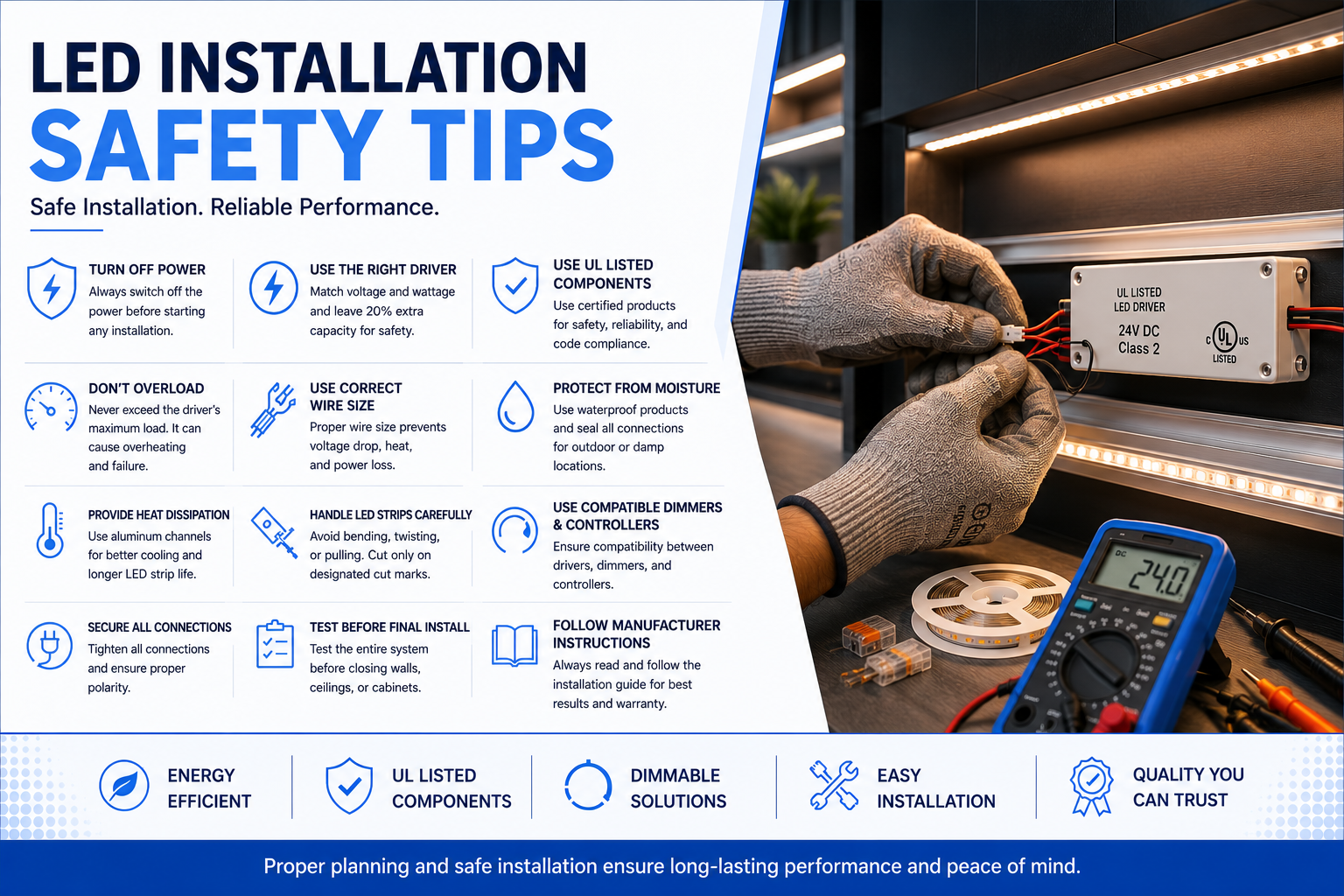
Proper LED installation is about more than achieving great lighting—it’s also about protecting people, equipment, and property. While LED lighting systems operate at lower voltages than traditional electrical systems, improper installation can still result in electrical hazards, equipment damage, system failures, and expensive service calls.
Whether you're installing LED strip lights, downlights, LED drivers, or smart lighting controls, following proven safety practices helps ensure reliable performance and long-term customer satisfaction.
This guide covers the most important LED installation safety tips every contractor, electrician, and professional installer should follow.
Turn Off Power Before Starting
One of the most basic—and most important—safety rules is to disconnect power before beginning any installation.
Always verify that power has been completely isolated before touching electrical wiring or equipment.
Before starting:
- Turn off the circuit breaker.
- Confirm the circuit is de-energized.
- Follow local electrical safety procedures.
- Never work on energized circuits.
Taking a few extra minutes to verify power is off can prevent serious accidents.
Choose the Correct LED Driver
Using the wrong LED driver is one of the most common causes of installation problems.
Always verify:
- Output voltage (12V or 24V)
- Driver wattage
- Total connected load
- Dimming compatibility
- Indoor or outdoor rating
As a best practice, choose a driver with approximately 20% additional capacity above the calculated load to improve reliability and reduce heat.
Use UL Listed Components
Certified products provide greater confidence in safety and performance.
Whenever possible, choose UL Listed:
- LED drivers
- LED strip lights
- Controllers
- Connectors
- Power supplies
- Installation accessories
Using certified components helps ensure compliance with many residential and commercial project requirements.
Never Overload the Driver
Running an LED driver at or near its maximum capacity continuously can shorten its lifespan.
Overloading may lead to:
- Excessive heat
- Flickering
- Reduced efficiency
- Premature driver failure
Always calculate the total connected wattage before installation and leave sufficient reserve capacity.
Use the Correct Wire Size
Proper wire sizing is essential for both safety and system performance.
Undersized wiring can cause:
- Voltage drop
- Excessive heat
- Reduced brightness
- Power loss
Select wire gauges based on:
- Cable length
- Current draw
- Installation environment
- Local electrical codes
Protect Against Moisture
Outdoor and damp-location installations require appropriate protection.
Always use:
- Weather-resistant LED drivers
- Waterproof LED strips where required
- Properly sealed electrical connections
- Suitable IP-rated components
Never install indoor-rated products in outdoor environments.
Provide Proper Heat Dissipation
Although LEDs generate less heat than traditional lighting, heat management remains essential.
For LED strip lighting, aluminum channels help:
- Improve cooling
- Protect the strip
- Extend product lifespan
- Create cleaner installations
Avoid installing high-output LED strips directly onto surfaces that trap heat.
Avoid Damaging LED Strips During Installation
LED strips should be handled carefully throughout installation.
Avoid:
- Excessive bending
- Sharp folds
- Twisting the strip
- Pulling on solder joints
- Cutting outside designated cut marks
Careful handling prevents unnecessary product damage.
Use Compatible Dimmers and Controllers
Not all dimmers are compatible with every LED driver.
Before installation, verify compatibility between:
- TRIAC dimmers
- ELV dimmers
- MLV dimmers
- 0–10V controls
- LED drivers
- Smart controllers
Using incompatible components can result in flickering, buzzing, or unstable operation.
Secure Wiring Properly
Loose electrical connections can create intermittent failures and unnecessary service calls.
Good installation practices include:
- Tight terminal connections
- Proper cable management
- Appropriate strain relief
- Correct polarity
- Secure mounting of drivers and controllers
Well-organized wiring also makes future maintenance easier.
Test the Entire System Before Final Installation
Before permanently mounting fixtures or closing ceilings and walls, test the complete system.
Verify:
- Brightness consistency
- Driver operation
- Controller functionality
- Dimming performance
- Color accuracy
- Wiring connections
Testing early saves time and reduces costly rework.
Follow Manufacturer Instructions
Every LED product is designed with specific installation requirements.
Always review the manufacturer's documentation for:
- Wiring diagrams
- Load limits
- Mounting instructions
- Environmental ratings
- Dimming compatibility
- Safety warnings
Following these recommendations helps maximize performance and warranty coverage.
Plan for Future Maintenance
Professional installations should remain accessible for future servicing.
Consider:
- Driver accessibility
- Controller location
- Cable labeling
- Junction box placement
- Service clearances
Good planning reduces maintenance time and simplifies future upgrades.
Why Safety Improves Project Quality
Safe installation practices benefit everyone involved in a project.
Advantages include:
- Fewer callbacks
- Improved reliability
- Longer equipment lifespan
- Better customer satisfaction
- Lower maintenance costs
- Increased installer confidence
Professional installation standards contribute to successful projects and long-term client relationships.
Conclusion
LED lighting systems are reliable, energy-efficient, and long-lasting when installed correctly. By following proper safety procedures, selecting compatible components, using certified products, and carefully planning every installation, contractors can deliver lighting systems that operate safely and perform consistently for years.
Whether you're installing LED strip lights, commercial downlights, LED drivers, or smart controls, prioritizing safety helps protect both the installation team and the finished project while ensuring dependable performance and customer satisfaction.
Frequently Asked Questions
Why should I turn off power before installing LED lighting?
Disconnecting power helps prevent electrical shock and ensures a safer installation environment.
Why is choosing the correct LED driver important?
The correct driver provides stable power, protects connected lighting, and improves the lifespan of the entire system.
Do LED strips need aluminum channels?
For many installations—especially high-output COB LED strips—aluminum channels improve heat dissipation, protect the strip, and create a more professional finish.
Should I use UL Listed LED products?
Yes. UL Listed components are independently tested for safety and reliability and are commonly specified for residential and commercial projects.
Why should I test the system before completing the installation?
Testing verifies that all components are functioning correctly before the installation is finalized, reducing troubleshooting and costly callbacks.