
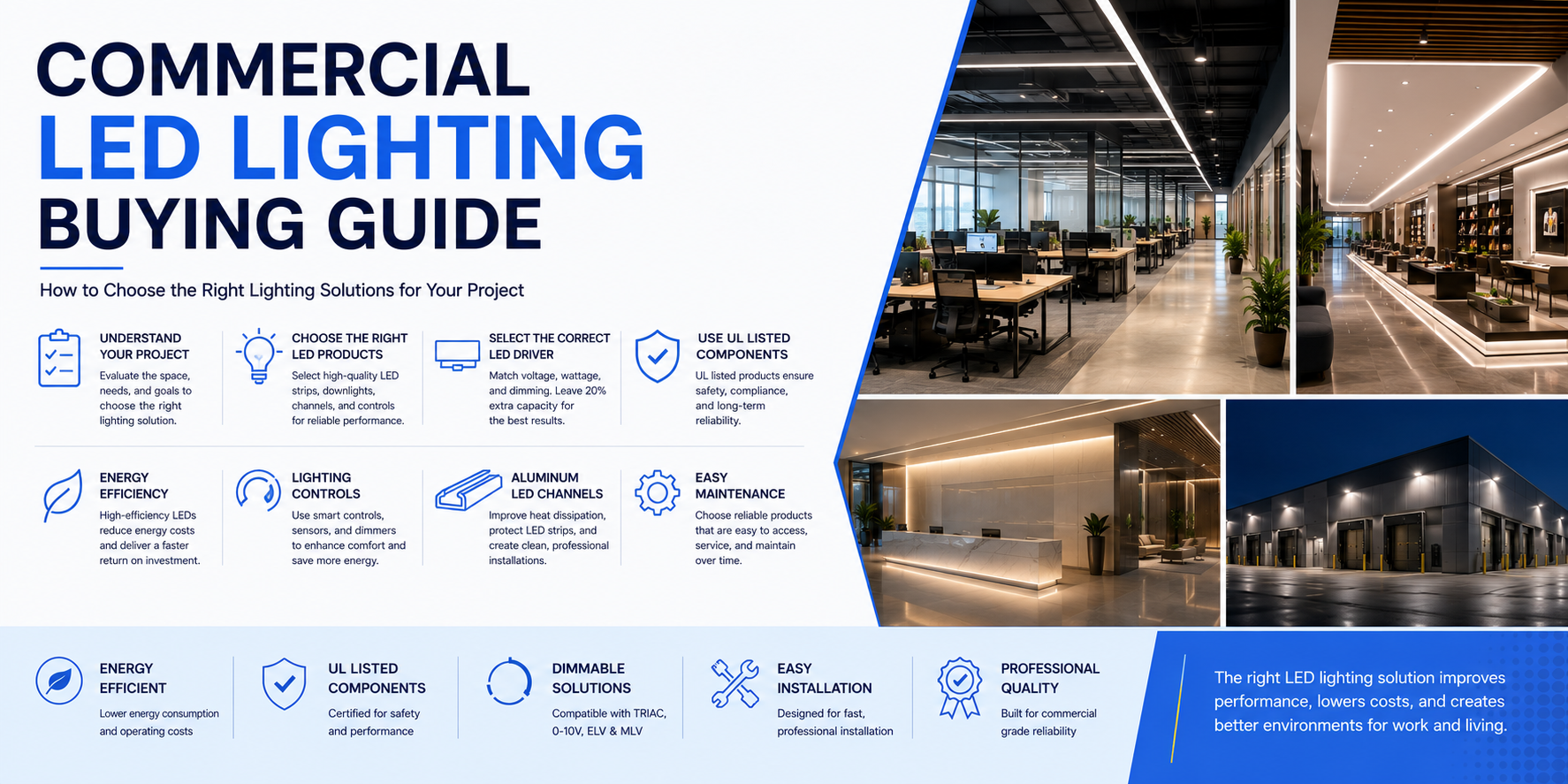
Commercial LED lighting has become the standard for modern businesses thanks to its energy efficiency, long lifespan, and superior performance. Whether you're designing a new commercial space or upgrading an existing facility, selecting the right LED lighting products is essential for creating a reliable, attractive, and cost-effective lighting system.
From offices and retail stores to hotels, warehouses, restaurants, and healthcare facilities, every commercial project has unique lighting requirements. Choosing compatible LED strips, drivers, controllers, and accessories helps ensure excellent performance while reducing maintenance and operating costs.
This buying guide explains the key factors every contractor, electrician, architect, and facility manager should consider before purchasing commercial LED lighting.
Understand Your Project Requirements
Before selecting any lighting products, evaluate the specific needs of the project.
Consider:
- Building type
- Ceiling height
- Indoor or outdoor installation
- Required brightness
- Operating hours
- Control requirements
- Budget
- Future expansion
A lighting solution designed for an office will differ significantly from one intended for a warehouse or hospitality environment.
Choose the Right LED Products
Commercial lighting systems often combine several LED products to achieve the desired result.
Common solutions include:
- COB LED Strip Lights
- Architectural LED Strip Lights
- LED Drivers
- LED Controllers
- Aluminum LED Channels
- Recessed LED Downlights
- Smart Lighting Controls
Selecting compatible products from the beginning simplifies installation and improves long-term reliability.
Select the Correct LED Driver
The LED driver is one of the most important components in any low-voltage lighting system.
When choosing a driver, verify:
- Output voltage (12V or 24V)
- Required wattage
- Dimming compatibility
- Indoor or outdoor rating
- UL certification
For best performance, leave approximately 20% additional capacity above the calculated lighting load.
Consider Energy Efficiency
Commercial buildings often operate lighting systems for long hours every day.
Energy-efficient LED lighting helps reduce:
- Electricity bills
- HVAC cooling loads
- Carbon emissions
- Maintenance expenses
Although premium LED products may have a higher initial cost, they often deliver substantial savings over their lifetime.
Choose the Appropriate Color Temperature
Color temperature affects both appearance and functionality.
General recommendations include:
- 3000K: Hotels, restaurants, lounges, and hospitality spaces
- 4000K: Offices, classrooms, healthcare facilities, and retail stores
- 5000K: Warehouses, manufacturing facilities, and task-oriented workspaces
Selecting the right color temperature improves comfort, visibility, and productivity.
Think About Lighting Controls
Modern commercial projects increasingly use intelligent lighting controls.
Popular options include:
- TRIAC dimming
- ELV dimming
- MLV dimming
- 0–10V dimming
- Motion sensors
- Occupancy sensors
- Daylight harvesting
- Wi-Fi and RF controllers
- Multi-zone lighting systems
Smart controls improve user experience while reducing unnecessary energy consumption.
Use Aluminum LED Channels
Aluminum channels do more than improve appearance.
They also:
- Dissipate heat
- Protect LED strips
- Produce cleaner installations
- Reduce dust accumulation
- Extend LED lifespan
Architectural projects frequently specify aluminum channels for both aesthetics and durability.
Choose UL Listed Components
Commercial projects often require certified electrical products.
UL Listed LED products provide confidence in:
- Electrical safety
- Product reliability
- Performance consistency
- Code compliance
- Long-term durability
Using certified components also helps simplify inspections and reduce warranty concerns.
Plan for Maintenance
Commercial lighting should be easy to maintain.
Look for products that offer:
- Long operating life
- Accessible drivers
- Replaceable components
- Reliable connectors
- Easy servicing
Reducing maintenance requirements minimizes disruptions and lowers operating costs.
Buy from a Trusted Supplier
A dependable supplier offers more than competitive pricing.
Look for:
- Consistent inventory
- Technical support
- Fast shipping
- Product warranties
- Commercial-grade quality
- Reliable customer service
Working with an experienced supplier helps projects stay on schedule while ensuring access to dependable products.
Common Commercial Applications
Commercial LED lighting is widely used in:
- Office buildings
- Retail stores
- Hotels
- Restaurants
- Warehouses
- Shopping centers
- Healthcare facilities
- Educational institutions
- Apartment buildings
- Showrooms
Each application benefits from a customized lighting solution based on its operational requirements.
Why Professionals Choose High-Quality Commercial LED Products
Professional contractors and lighting designers prioritize products that offer dependable performance across demanding commercial environments.
Premium commercial LED solutions provide:
- Stable illumination
- Longer service life
- Excellent thermal management
- Smooth dimming
- Lower maintenance
- Improved energy efficiency
- Professional appearance
These advantages help reduce callbacks while delivering greater value to clients.
Conclusion
Choosing commercial LED lighting involves much more than selecting fixtures. A successful lighting system requires compatible LED drivers, efficient strip lights, quality controllers, proper color temperature, smart controls, and certified components.
By carefully evaluating your project's requirements and investing in commercial-grade products, you can create lighting systems that improve energy efficiency, reduce maintenance costs, enhance occupant comfort, and deliver reliable performance for years to come.
Whether you're lighting a small office or a large commercial development, thoughtful planning and high-quality LED products are the foundation of every successful project.
Frequently Asked Questions
What is the most important factor when choosing commercial LED lighting?
The lighting should match the project's requirements, including brightness, color temperature, operating hours, and control options.
Should commercial projects use 12V or 24V LED systems?
24V systems are generally preferred for larger installations because they reduce voltage drop and support longer LED strip runs.
Why should I use UL Listed LED products?
UL Listed products are independently tested for safety and reliability, making them ideal for commercial applications.
Do commercial LED systems require smart controls?
While not mandatory, smart controls improve energy efficiency, simplify operation, and reduce operating costs.
Why are high-quality LED drivers important?
A reliable LED driver provides stable power, supports smooth dimming, protects connected lighting, and extends the lifespan of the entire system.