
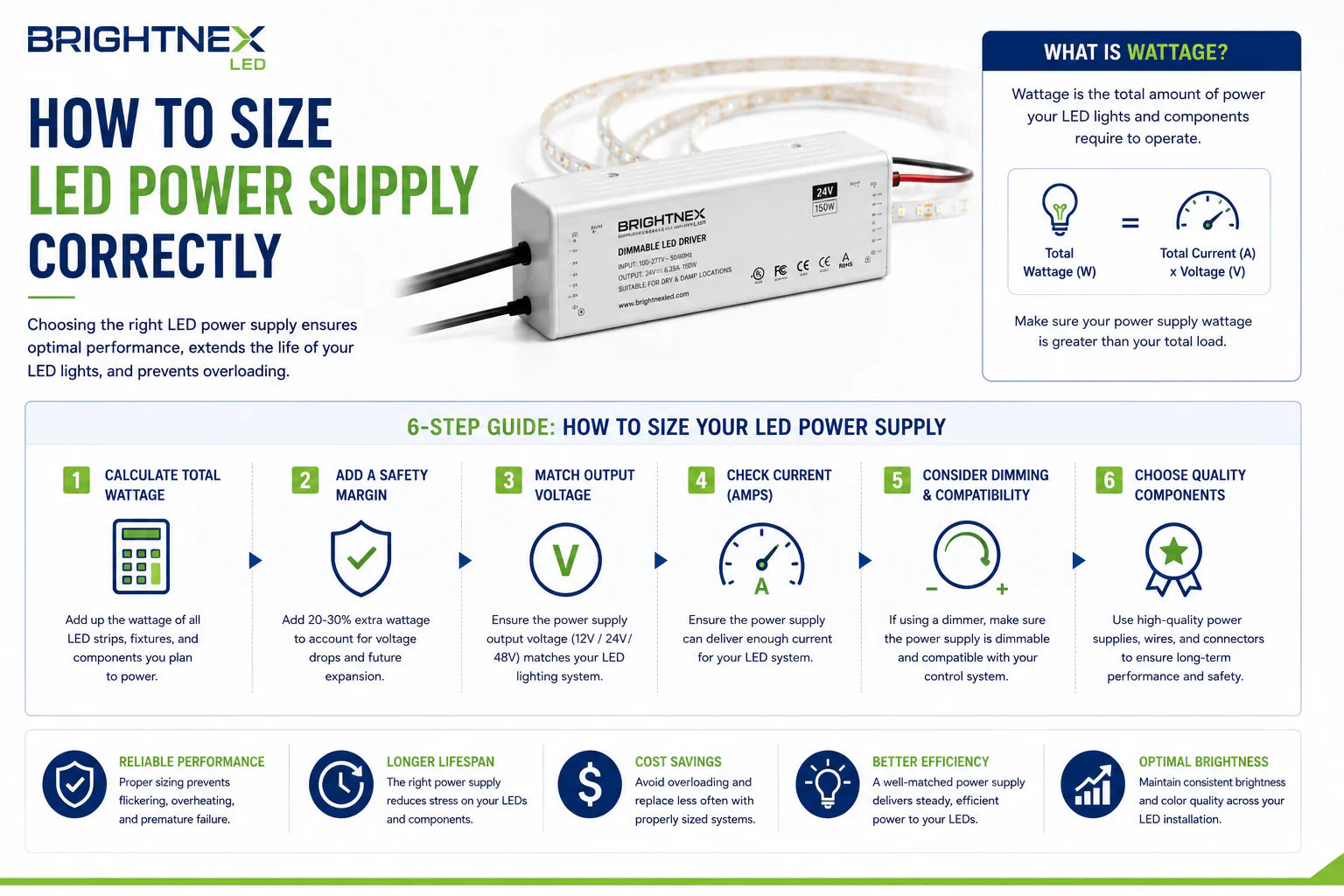
Why Proper LED Power Supply Sizing Matters
Many LED lighting problems are caused long before the system is energized. Flicker, dimming instability, shortened driver life, voltage drop, and premature failures often trace back to one issue: improper power supply sizing.
For electricians, contractors, lighting dealers, and project buyers, selecting the correct power supply is essential for reliable performance. Whether the project involves LED strip lighting, architectural coves, under-cabinet lighting, retail displays, or luxury residential applications, the driver must be properly matched to the load.
A correctly sized power supply improves system reliability, supports better dimming performance, and helps reduce costly callbacks.
How to Size LED Power Supply Correctly
The sizing process begins with voltage.
Most LED strip lighting systems operate on either 12V DC or 24V DC. The power supply output voltage must always match the voltage of the LED product.
A 24V strip requires a 24V power supply.
A 12V strip requires a 12V power supply.
This is not an interchangeable specification. Using the wrong voltage can damage components and create immediate performance issues.
Once voltage is confirmed, the next step is calculating total wattage.
Calculate Total Load Wattage
For LED strip lights, total wattage is determined by multiplying strip wattage per foot by total installed length.
Formula:
Total Load Wattage = Watts per Foot × Total Feet Installed
Example:
• Strip rating: 5W per foot
• Total length: 16 feet
Total Load = 5 × 16 = 80 watts
If multiple strip runs connect to the same driver, add all connected loads together before selecting a power supply.
Add Safety Headroom
Professional installers rarely size a power supply exactly to the calculated load.
A common rule is to add at least 20% capacity above the expected load.
Formula:
Minimum Driver Size = Total Load × 1.2
Using the previous example:
80W × 1.2 = 96W
In practice, this would typically mean selecting the next available size, such as a 100W driver.
Additional capacity helps improve:
• Thermal performance
• Driver longevity
• Startup behavior
• Dimming stability
• Overall reliability
Projects operating in warm environments or running for extended hours often benefit from even more margin.
LED Power Supply Sizing Formula
For most constant-voltage strip lighting projects:
Total Load = Watts per Foot × Total Feet
Recommended Driver Size = Total Load × 1.2
Example:
24V COB Strip
• 4.4W per foot
• 30 feet installed
Load:
4.4 × 30 = 132W
Driver Requirement:
132 × 1.2 = 158.4W
A practical selection would be:
• 160W driver
• 192W driver
The final choice depends on available driver sizes, dimming requirements, and installation conditions.
Why Amperage Matters
Current draw should always be reviewed during driver selection.
Power is calculated using:
Watts = Volts × Amps
For example:
96W ÷ 12V = 8 Amps
Higher current creates greater demand on:
• Wiring
• Connectors
• Power distribution
• Voltage drop management
This is one reason 24V systems are often preferred for longer runs. They carry less current for the same wattage, making installation easier and reducing voltage loss.
24V vs 12V for Longer Runs
Many professional installers choose 24V systems whenever possible.
Benefits include:
• Lower current draw
• Reduced voltage drop
• Longer practical run lengths
• Easier wire management
• More stable performance
While 12V systems still have important applications, 24V is often the better choice for architectural lighting, long cabinet runs, coves, and large residential projects.
Dimming Compatibility Must Be Verified
Correct wattage alone does not guarantee a successful installation.
The power supply must also support the intended dimming method.
Common dimming types include:
• TRIAC
• ELV
• MLV
• 0-10V
A driver that supports the wrong dimming method can cause:
• Flicker
• Buzzing
• Dropout
• Poor low-end dimming
• Inconsistent performance
Luxury residential projects often place especially high demands on dimming quality, making driver selection even more important.
Constant Voltage vs Constant Current
Most LED strip lights use constant-voltage power supplies.
Typical outputs include:
• 12V DC
• 24V DC
Some fixtures, modules, and architectural products use constant-current drivers instead.
These systems are selected based on:
• Output current
• Voltage range
• Fixture requirements
Constant-current and constant-voltage drivers should never be treated as interchangeable products.
Always follow the electrical requirements specified by the lighting manufacturer.
Installation Environment Affects Driver Selection
Driver sizing involves more than electrical load.
Environmental conditions also matter.
Dry Locations
Suitable for:
• Cabinet lighting
• Interior shelving
• Closets
• General indoor applications
Damp Locations
Suitable for:
• Bathrooms
• Covered outdoor areas
• Utility spaces
Wet Locations
Suitable for:
• Exterior installations
• Moisture-prone environments
• Exposed outdoor applications
The driver rating must match the actual installation conditions.
Heat Impacts Performance
Temperature affects driver longevity and performance.
Drivers installed in:
• Cabinet cavities
• Tight millwork spaces
• Ceiling voids
• Poorly ventilated enclosures
often operate at higher temperatures than expected.
Additional sizing margin can help offset thermal stress and improve long-term reliability.
Junction Box Drivers Simplify Installation
Many professional projects benefit from drivers with integrated junction boxes.
Advantages include:
• Protected line-voltage connections
• Cleaner installation
• Easier inspection compliance
• Improved wiring organization
These products are especially useful when projects include multiple environmental conditions or strict inspection requirements.
Common LED Power Supply Sizing Mistakes
Several mistakes appear repeatedly in the field.
Choosing a Driver with No Headroom
A 100W load should not typically be paired with a 100W driver.
Leaving reserve capacity improves reliability.
Using the Wrong Voltage
A mismatch between strip voltage and driver voltage will create immediate problems.
Always verify voltage before ordering.
Ignoring Multiple Loads
Installers sometimes calculate only one run and forget additional connected strips.
Always calculate total connected wattage.
Overlooking Dimming Compatibility
Many flicker complaints originate from dimmer-driver mismatches rather than strip defects.
Confirm dimming requirements before purchasing.
Ignoring Voltage Drop
Even properly sized drivers can produce uneven results if wire length, feed location, and conductor size are not considered.
Example: RGBW Strip Lighting Project
Assume a project includes:
• Four RGBW strip runs
• 12 feet each
• 7W per foot
Total Length:
48 feet
Total Load:
48 × 7 = 336W
Recommended Capacity:
336 × 1.2 = 403.2W
Rather than using one oversized driver, the better solution may involve multiple power supplies depending on:
• Wiring layout
• Voltage drop
• Control zones
• Serviceability requirements
This approach often produces better long-term results.
When Bigger Is Not Always Better
Oversizing within reason is good practice.
Extreme oversizing is not always beneficial.
Some dimming systems and drivers perform best within specific load ranges.
The goal is not the largest available power supply.
The goal is the correct power supply with appropriate reserve capacity.
Professional LED Power Supply Sizing Checklist
Before ordering, confirm:
✔ Output voltage matches LED product
✔ Total wattage has been calculated
✔ At least 20% capacity margin is included
✔ Dimming compatibility is verified
✔ Environmental rating matches the location
✔ Voltage drop has been reviewed
✔ Driver placement is practical and serviceable
✔ Certification requirements are met
Following these steps helps eliminate many of the most common installation problems before they occur.
Conclusion
Learning how to size LED power supply products correctly is one of the most important steps in designing reliable LED lighting systems.
By matching voltage, calculating total load accurately, adding proper headroom, confirming dimming compatibility, and considering environmental conditions, professionals can improve system performance and significantly reduce callbacks.
The best lighting installations are rarely the result of oversized components or guesswork. They come from selecting the right power supply for the application and building the entire system around compatibility and long-term reliability.
FAQ
How much extra capacity should an LED power supply have?
A common recommendation is at least 20% additional capacity above the calculated load.
Can I use a larger LED power supply than required?
Yes, within reason. Moderate oversizing improves reliability, but excessive oversizing may not always be beneficial.
Should I choose 12V or 24V LED strip lighting?
For longer runs, 24V systems are often preferred because they reduce current draw and voltage drop.
Do dimmable LED systems require special drivers?
Yes. The driver must support the same dimming method used by the control system.
What causes LED driver failures most often?
Common causes include undersizing, overheating, poor ventilation, voltage mismatch, and incompatible dimming systems.