
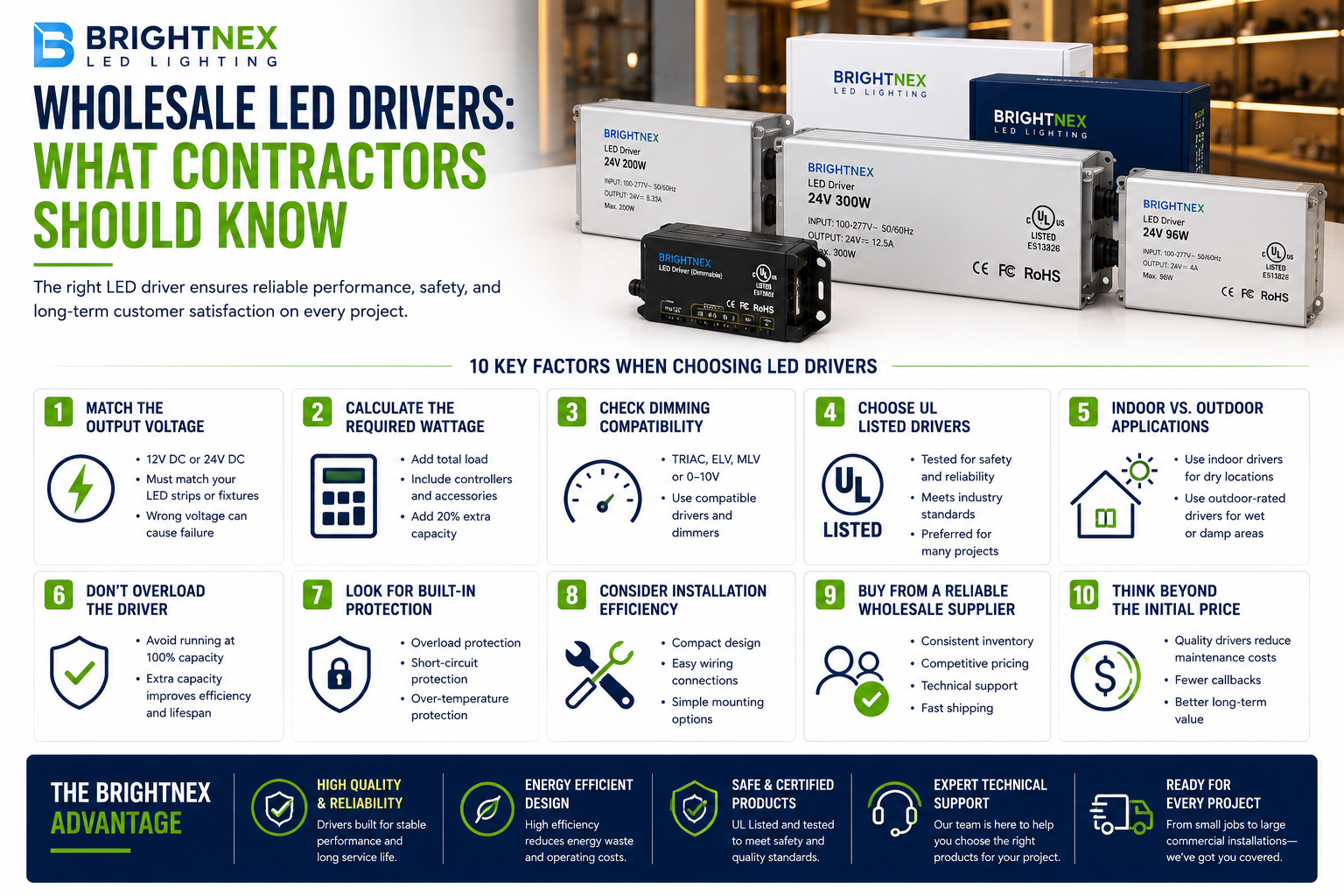
A high-quality LED lighting system depends on more than premium LED strips or downlights. At the heart of every low-voltage lighting installation is the LED driver, which provides stable DC power and protects the entire system from electrical fluctuations. Selecting the wrong driver can lead to flickering, inconsistent brightness, overheating, premature failure, and costly callbacks.
For electrical contractors, builders, lighting distributors, and commercial installers, choosing wholesale LED drivers is about more than finding the lowest price. Reliability, compatibility, certifications, and long-term performance all play an important role in delivering successful projects.
This guide explains what contractors should consider when purchasing wholesale LED drivers and how the right choice can improve installation efficiency and customer satisfaction.
Why the LED Driver Is So Important
An LED driver converts standard AC power into the low-voltage DC power required by LED lighting products.
Beyond simply supplying electricity, a quality driver helps provide:
- Stable voltage output
- Consistent brightness
- Smooth dimming performance
- Protection against overload and short circuits
- Longer LED lifespan
- Improved energy efficiency
Even premium LED strips can perform poorly when paired with an unsuitable driver.
Choose the Correct Output Voltage
One of the first specifications to verify is the driver's output voltage.
Most architectural and commercial LED lighting systems operate on either 12V DC or 24V DC. The driver must match the voltage required by the LED strip, controller, or fixture.
Using an incorrect voltage may cause:
- Permanent product damage
- Failure to operate
- Reduced lifespan
- Safety concerns
Always verify product specifications before installation.
Calculate the Required Wattage
Selecting the proper wattage is just as important as choosing the correct voltage.
To determine the required driver capacity:
- Find the LED strip's power consumption per foot or meter.
- Multiply by the total installation length.
- Add the power required for any compatible controllers or accessories.
- Include approximately 20% additional capacity for long-term reliability.
For example, if a project requires 160 watts, selecting a 200-watt driver provides a comfortable operating margin and helps reduce heat buildup.
Understand Dimming Compatibility
Modern lighting projects often require dimming functionality.
Before purchasing a driver, confirm compatibility with the project's control system.
Common dimming technologies include:
- TRIAC
- ELV
- MLV
- 0–10V
Using incompatible dimmers and drivers may result in flickering, buzzing, limited dimming range, or unstable operation.
Selecting compatible components from the beginning helps eliminate unnecessary troubleshooting.
Choose UL Listed Products
Commercial and residential projects frequently specify certified electrical products.
UL Listed LED drivers are independently tested for safety, reliability, and performance.
Benefits include:
- Improved electrical safety
- Greater confidence during inspections
- Reliable long-term operation
- Consistent manufacturing quality
- Compliance with many project requirements
For contractors, using certified products also reduces the likelihood of installation issues and warranty claims.
Indoor vs. Outdoor Applications
Not every LED driver is designed for the same environment.
Indoor installations typically use drivers intended for dry locations, while outdoor or damp environments require drivers with appropriate environmental protection.
For exterior applications, consider:
- Weather resistance
- Moisture protection
- Suitable IP ratings
- Ventilation requirements
- Mounting location
Using the proper driver for the environment improves reliability and extends product life.
Don't Overload the Driver
Operating a driver at maximum capacity continuously generates additional heat and places unnecessary stress on internal components.
A properly sized driver should provide reserve capacity for:
- Improved efficiency
- Cooler operation
- Longer service life
- Future lighting expansion
Most professional installers avoid running drivers at their maximum rated output whenever possible.
Look for Built-In Protection Features
Quality LED drivers include protection circuits that help prevent damage during abnormal operating conditions.
Important features include:
- Overload protection
- Short-circuit protection
- Over-temperature protection
- Over-voltage protection
These safeguards help protect both the driver and connected lighting equipment.
Consider Installation Efficiency
Contractors often work under tight schedules, making installation efficiency an important factor.
Drivers designed with installer-friendly features can reduce labor time.
Helpful design features include:
- Compact housing
- Clearly labeled wiring terminals
- Junction box options
- Easy mounting
- Accessible wiring compartments
Simple installation can significantly reduce project completion time on larger jobs.
Buy from a Reliable Wholesale Supplier
Choosing the right supplier is just as important as choosing the right product.
A dependable wholesale partner should offer:
- Consistent inventory
- Competitive pricing
- Technical product support
- Fast order fulfillment
- Reliable product availability
- High-quality certified products
Working with a trusted supplier helps contractors complete projects on schedule while minimizing delays caused by unavailable materials.
Think Beyond the Initial Price
The least expensive driver isn't always the most cost-effective option.
Low-quality drivers may increase:
- Maintenance costs
- Warranty replacements
- Service calls
- Customer complaints
- Installation time
Investing in dependable products often reduces total project costs over the life of the installation.
Why Contractors Choose Premium LED Drivers
Professional contractors prioritize products that deliver reliable performance across residential, commercial, hospitality, retail, and architectural projects.
Premium LED drivers provide:
- Stable power output
- Excellent dimming performance
- Longer operating life
- Better thermal management
- Higher efficiency
- Improved overall system reliability
These advantages contribute to fewer callbacks, happier clients, and more successful installations.
Conclusion
Selecting wholesale LED drivers involves more than comparing prices. Contractors should evaluate voltage, wattage, dimming compatibility, safety certifications, environmental ratings, protection features, and supplier reliability before making a purchasing decision.
By choosing high-quality LED drivers designed for professional installations, contractors can improve project performance, reduce maintenance, and deliver lighting systems that continue operating reliably for years.
Whether you're supplying residential renovations or large commercial developments, investing in dependable LED drivers is one of the smartest decisions you can make for every project.
Frequently Asked Questions
Why is choosing the correct LED driver important?
The correct driver provides stable power, supports proper dimming, protects connected lighting, and helps maximize the lifespan of the entire LED system.
How much extra capacity should an LED driver have?
A good rule of thumb is to choose a driver with approximately 20% more capacity than the total connected load.
Can I use any dimmer with an LED driver?
No. The dimmer and driver must be compatible. Always verify whether the system uses TRIAC, ELV, MLV, or 0–10V dimming.
Should contractors choose UL Listed LED drivers?
Yes. UL Listed drivers offer verified safety, reliability, and are commonly required for many residential and commercial projects.
What should I look for in a wholesale LED driver supplier?
Choose a supplier that offers quality certified products, dependable inventory, technical support, competitive pricing, and fast shipping.