
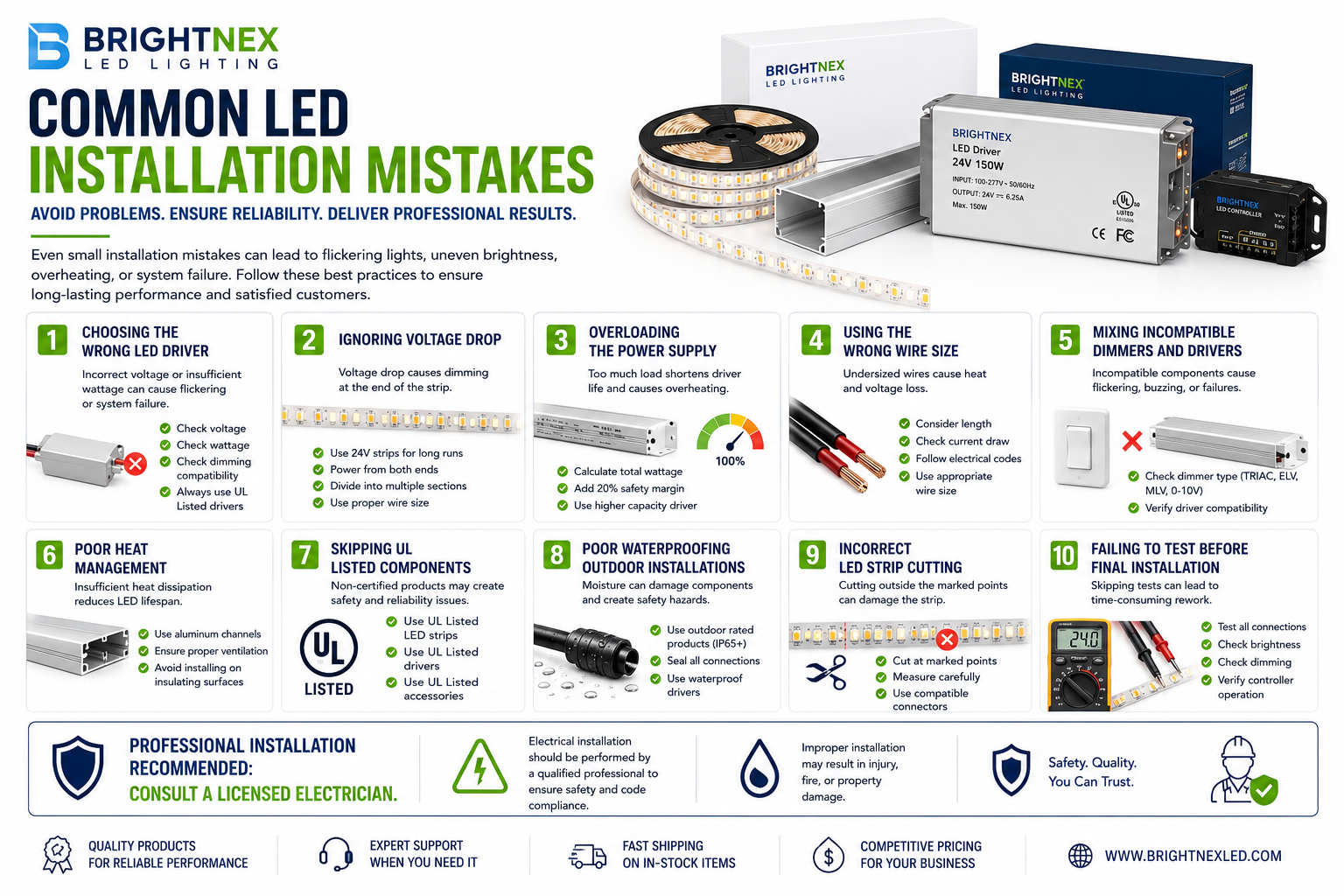
Installing LED lighting may seem straightforward, but even experienced installers can make mistakes that affect performance, reliability, and safety. From selecting the wrong LED driver to overlooking voltage drop, small installation errors can lead to flickering lights, uneven brightness, overheating, or premature product failure.
Whether you're an electrician, contractor, lighting supplier, or project manager, understanding these common mistakes can help you deliver professional installations that perform reliably for years. In this guide, we'll cover the most frequent LED installation mistakes and explain how to avoid them.
1. Choosing the Wrong LED Driver
One of the most common installation mistakes is selecting an LED driver that doesn't match the lighting system.
Many installers accidentally use the wrong output voltage or choose a driver with insufficient wattage. This can cause unstable operation, flickering, or complete system failure.
Before selecting a driver, always verify:
- Output voltage (12V, 24V, or other)
- Total wattage required
- Dimming compatibility
- Indoor or outdoor installation requirements
- UL certification for the project
As a best practice, select a driver with approximately 20% additional capacity above the calculated load to improve long-term reliability.
2. Ignoring Voltage Drop
Voltage drop becomes increasingly important on longer LED strip installations.
As electricity travels through the strip, voltage gradually decreases, resulting in dimmer LEDs toward the end of the run.
Signs of voltage drop include:
- Uneven brightness
- Color shifting
- Reduced light output
- Inconsistent performance
Solutions include:
- Use 24V LED strips for longer runs
- Feed power from both ends when appropriate
- Divide long installations into multiple sections
- Use properly sized wiring
Planning power distribution before installation helps prevent these issues.
3. Overloading the Power Supply
Connecting too many LED strips to a single driver is another frequent mistake.
Running a driver continuously at 100% capacity increases heat generation and reduces its expected service life.
Instead:
- Calculate the total power consumption.
- Include all connected accessories and controllers.
- Leave a safety margin of around 20%.
- Choose a higher-capacity driver if future expansion is possible.
4. Using the Wrong Wire Size
Undersized wiring creates unnecessary resistance and voltage loss.
Long cable runs carrying higher current require thicker conductors to maintain proper voltage.
Always consider:
- Total cable length
- Current draw
- Installation environment
- Local electrical codes
Proper wire sizing improves efficiency and system reliability.
5. Mixing Incompatible Dimmers and Drivers
Not every dimmer works with every LED driver.
Installing incompatible dimming equipment often results in:
- Flickering
- Buzzing
- Limited dimming range
- Lights failing to turn off completely
Always confirm compatibility between the driver and the dimming technology being used, whether TRIAC, ELV, MLV, or 0-10V.
6. Poor Heat Management
LEDs produce less heat than traditional lighting, but they still require proper thermal management.
Installing LED strips directly onto insulating surfaces without adequate heat dissipation may shorten their lifespan.
Using aluminum LED channels helps:
- Dissipate heat
- Improve durability
- Produce straighter installations
- Protect LED strips from dust and physical damage
This is especially important for high-output COB LED strips.
7. Skipping UL Listed Components
Choosing uncertified electrical components may reduce initial costs but can create long-term safety and reliability concerns.
UL Listed products are tested for:
- Electrical safety
- Performance consistency
- Fire protection
- Product reliability
Many commercial projects require certified products to meet inspection and code requirements.
8. Poor Waterproofing for Outdoor Installations
Outdoor lighting requires components designed for wet environments.
Common mistakes include:
- Using indoor LED strips outdoors
- Exposed wire connections
- Non-waterproof drivers
- Inadequate sealing
For exterior projects, choose products with appropriate IP ratings and protect all electrical connections from moisture.
9. Incorrect LED Strip Cutting
LED strips should only be cut at the designated cutting marks.
Cutting elsewhere can permanently damage the circuit and prevent sections from operating.
Before cutting:
- Measure carefully.
- Identify the manufacturer's cut marks.
- Use compatible connectors when needed.
Taking a few extra minutes can prevent unnecessary waste.
10. Failing to Test Before Final Installation
One of the simplest but most overlooked steps is testing the complete system before permanently mounting it.
Testing allows installers to verify:
- Brightness consistency
- Color accuracy
- Controller operation
- Dimming performance
- Wiring connections
Identifying problems before installation saves significant time during project completion.
Why Professional Planning Matters
Successful LED installations depend on more than selecting quality products. Proper planning, accurate calculations, compatible components, and careful installation all contribute to long-term performance.
Experienced contractors understand that spending extra time during planning helps reduce callbacks, improve customer satisfaction, and lower maintenance costs.
For commercial projects, using high-quality LED strips, reliable LED drivers, compatible controllers, and certified components provides better performance throughout the life of the installation.
Conclusion
Most LED installation problems can be prevented with proper planning and attention to detail. Selecting the correct driver, accounting for voltage drop, using appropriate wiring, managing heat, and verifying compatibility all contribute to a reliable lighting system.
Whether you're installing LED lighting in residential homes, retail spaces, offices, hotels, or commercial buildings, following best practices ensures better performance, improved safety, and longer product life.
Investing in quality components and following professional installation standards will help every project deliver the brightness, efficiency, and reliability that customers expect.
Frequently Asked Questions
What is the most common LED installation mistake?
Using an incorrect LED driver or overloading the power supply are among the most common installation mistakes.
Why do my LED strips get dimmer toward the end?
This is usually caused by voltage drop, especially on long strip runs.
Should I use aluminum channels for LED strips?
Yes. Aluminum channels improve heat dissipation, protect the strip, and create a cleaner, more professional installation.
How much extra capacity should an LED driver have?
A good practice is to choose a driver with about 20% more capacity than the total connected load.
Why should I use UL Listed LED products?
UL Listed products are tested for safety and reliability, making them a preferred choice for residential and commercial installations.