
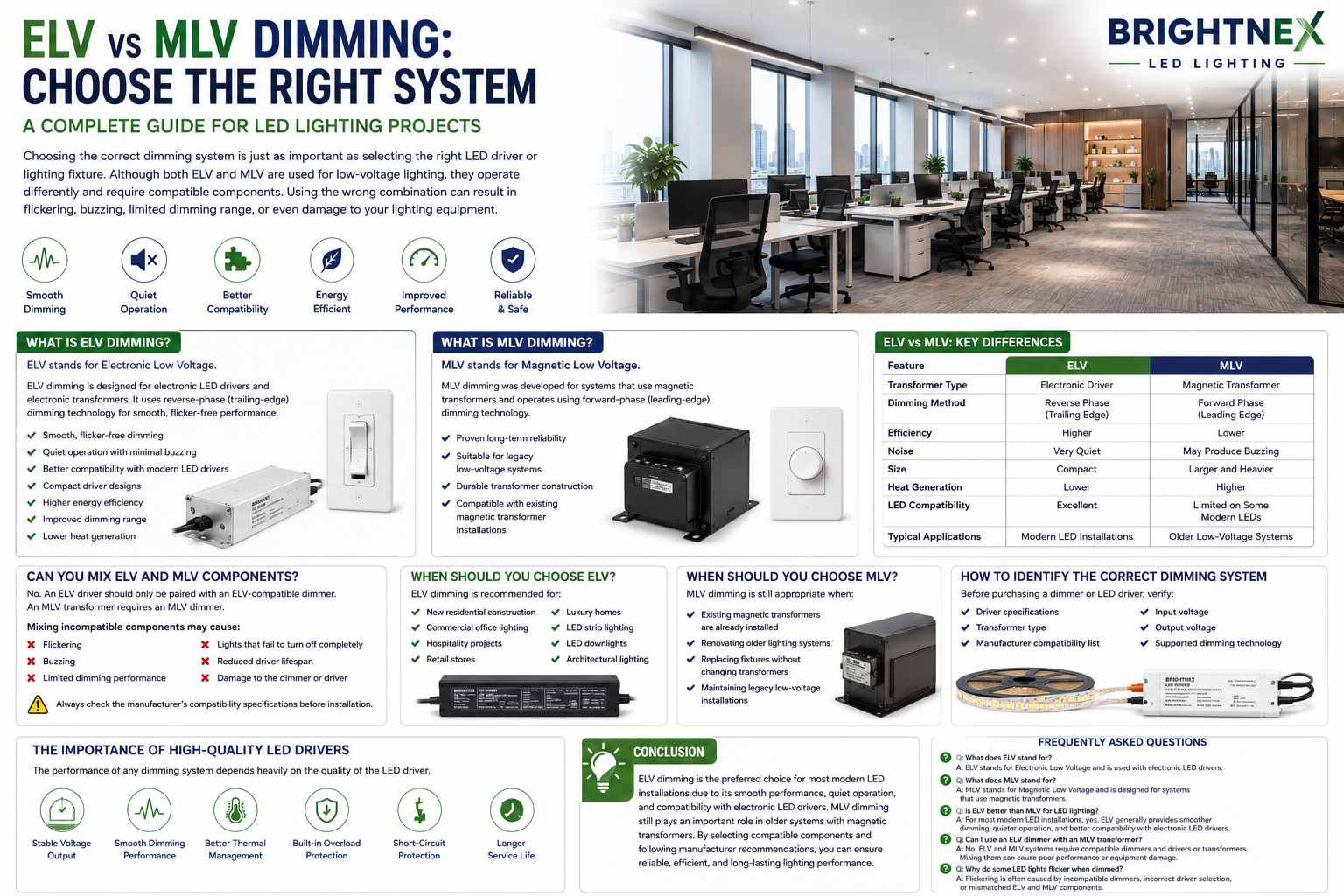
Choosing the correct dimming system is just as important as selecting the right LED driver or lighting fixture. Two common dimming technologies used in residential and commercial lighting are ELV (Electronic Low Voltage) and MLV (Magnetic Low Voltage) dimming.
Although both are designed for low-voltage lighting systems, they operate differently and require compatible drivers and dimmers. Using the wrong combination can result in flickering, buzzing, limited dimming range, or even damage to your lighting equipment.
This guide explains the differences between ELV and MLV dimming, their advantages, typical applications, and how to determine which option is best for your project.
What Is ELV Dimming?
ELV stands for Electronic Low Voltage.
ELV dimming is designed for electronic LED drivers and electronic transformers. Instead of using a magnetic transformer, ELV systems rely on electronic circuitry to regulate power efficiently.
Most modern LED lighting systems use electronic drivers, making ELV one of the most common dimming methods for contemporary installations.
Advantages of ELV dimming include:
- Smooth, flicker-free dimming
- Quiet operation with minimal buzzing
- Better compatibility with modern LED drivers
- Compact driver designs
- Higher energy efficiency
- Improved dimming range
- Lower heat generation
ELV dimmers typically use reverse-phase (trailing-edge) dimming technology, which provides better performance with LED lighting.
What Is MLV Dimming?
MLV stands for Magnetic Low Voltage.
MLV dimming was originally developed for lighting systems that use magnetic transformers. These transformers are larger and heavier than electronic drivers and are commonly found in older low-voltage lighting installations.
MLV dimmers operate using forward-phase (leading-edge) dimming.
Although still used in certain applications, MLV systems are becoming less common as electronic LED drivers continue to replace magnetic transformers.
Benefits of MLV dimming include:
- Proven long-term reliability
- Suitable for legacy low-voltage systems
- Durable transformer construction
- Compatible with existing magnetic transformer installations
However, MLV systems are generally larger, heavier, and less energy-efficient than modern electronic alternatives.
ELV vs MLV: Key Differences
| Feature | ELV | MLV |
|---|---|---|
| Transformer Type | Electronic Driver | Magnetic Transformer |
| Dimming Method | Reverse Phase (Trailing Edge) | Forward Phase (Leading Edge) |
| Efficiency | Higher | Lower |
| Noise | Very Quiet | May Produce Audible Buzzing |
| Size | Compact | Larger and Heavier |
| Heat Generation | Lower | Higher |
| LED Compatibility | Excellent | Limited on Some Modern LEDs |
| Typical Applications | Modern LED Installations | Older Low-Voltage Systems |
Which One Works Better with LED Lighting?
For most new LED lighting projects, ELV dimming is the preferred choice.
Modern LED drivers are typically designed for electronic dimming systems and provide smoother operation with trailing-edge dimmers.
Benefits include:
- Better low-level dimming
- Reduced flickering
- Less audible noise
- Improved efficiency
- Longer driver lifespan
Many premium LED drivers are specifically engineered for ELV compatibility.
Can You Mix ELV and MLV Components?
No.
An ELV driver should only be paired with an ELV-compatible dimmer.
Likewise, an MLV transformer requires an MLV dimmer.
Mixing incompatible components may cause:
- Flickering
- Buzzing
- Limited dimming performance
- Lights that fail to turn off completely
- Reduced driver lifespan
- Damage to the dimmer or driver
Always check the manufacturer's compatibility specifications before installation.
When Should You Choose ELV?
ELV dimming is recommended for:
- New residential construction
- Commercial office lighting
- Hospitality projects
- Retail stores
- Luxury homes
- LED strip lighting
- LED downlights
- Architectural lighting
If you're installing modern LED products, ELV is usually the best option.
When Should You Choose MLV?
MLV dimming is still appropriate when:
- Existing magnetic transformers are already installed
- Renovating older lighting systems
- Replacing fixtures without changing transformers
- Maintaining legacy low-voltage installations
Replacing an entire lighting system may not always be necessary if the existing magnetic transformer is still functioning properly.
How to Identify the Correct Dimming System
Before purchasing a dimmer or LED driver, verify:
- Driver specifications
- Transformer type
- Manufacturer compatibility list
- Input voltage
- Output voltage
- Supported dimming technology
Reading the product specifications carefully helps prevent installation problems and unnecessary troubleshooting.
The Importance of High-Quality LED Drivers
The performance of any dimming system depends heavily on the quality of the LED driver.
Professional-grade drivers provide:
- Stable voltage output
- Smooth dimming performance
- Better thermal management
- Built-in overload protection
- Short-circuit protection
- Longer service life
Using premium drivers helps maximize the performance of both ELV and MLV systems.
Conclusion
Understanding the difference between ELV and MLV dimming is essential for designing reliable LED lighting systems. While both technologies are used for low-voltage lighting, ELV dimming has become the preferred choice for most modern LED installations thanks to its smooth performance, quiet operation, and compatibility with electronic LED drivers.
MLV dimming still has an important place in older systems that use magnetic transformers, but for new residential and commercial projects, ELV-compatible LED drivers and dimmers typically provide the best overall results.
By selecting compatible components and following manufacturer recommendations, contractors and installers can deliver lighting systems that operate efficiently, dim smoothly, and provide years of dependable performance.
Frequently Asked Questions
What does ELV stand for?
ELV stands for Electronic Low Voltage and is used with electronic LED drivers and electronic transformers.
What does MLV stand for?
MLV stands for Magnetic Low Voltage and is designed for systems that use magnetic transformers.
Is ELV better than MLV for LED lighting?
For most modern LED installations, yes. ELV generally provides smoother dimming, quieter operation, and better compatibility with electronic LED drivers.
Can I use an ELV dimmer with an MLV transformer?
No. ELV and MLV systems require compatible dimmers and drivers or transformers. Mixing them can cause poor performance or equipment damage.
Why do some LED lights flicker when dimmed?
Flickering is often caused by incompatible dimmers, incorrect driver selection, or mismatched ELV and MLV components.