
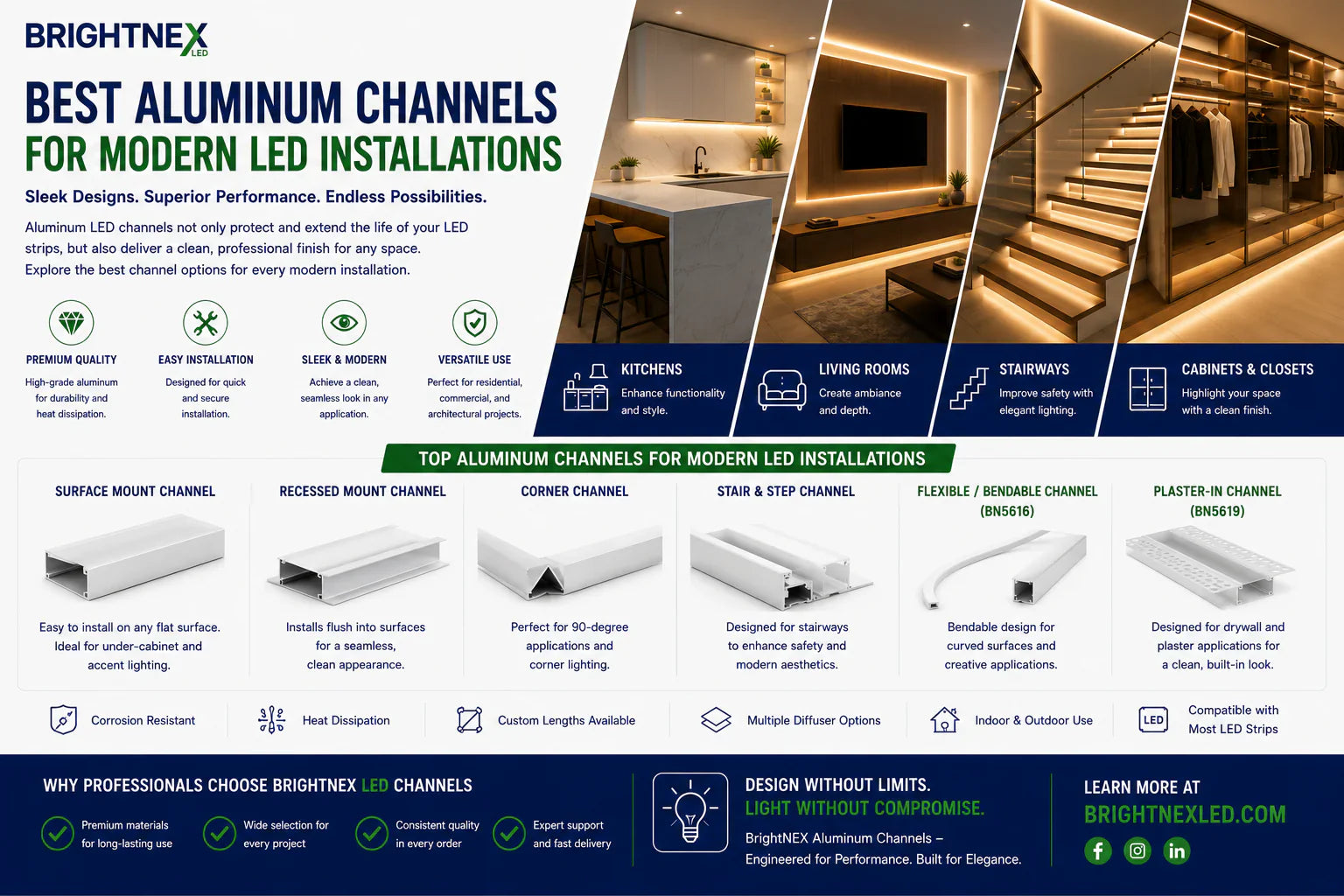
Best Aluminum Channels for Modern LED Installations: Complete Guide
What makes aluminum channels worth specifying
Bare strip lights can work in hidden locations, but modern projects rarely stop at "good enough." Once the LED tape is visible to the eye, reflected on polished surfaces, or installed where clients expect a refined finish, the profile matters. A quality aluminum channel gives the strip a straight mounting surface, improves heat dissipation, protects the tape from dust and incidental contact, and supports a diffuser that softens the output.
That last point is where many installations win or lose. The channel itself is only half the decision. The combination of profile depth, diffuser type, and LED density determines whether the finished line appears smooth or dotted. If you are using COB or high-density tape, you have more flexibility. If you are using standard SMD strip, channel depth becomes more critical.
The best aluminum channels for modern LED installations by application
There is no single best profile for every project. The best choice depends on where the channel will sit, how visible the light source is, and how much build depth the millwork or surface allows.
Surface-mounted channels for fast, clean upgrades
Surface-mounted channels are the practical default for under-cabinet lighting, shelf lighting, closet systems, display cases, and retrofit applications. They install quickly, keep labor predictable, and work well when recessing is not possible.
For most professional jobs, a wider surface profile is the safer choice than an ultra-slim one. It gives you better strip compatibility across 8mm, 10mm, and 12mm tape options, and it usually handles heat better on longer runs. Slim channels still have a place, especially where reveal lines must stay discreet, but they can limit diffuser performance and wiring space.
If you want the cleanest look in a visible kitchen or built-in, pair a surface profile with a frosted lens and high-density or COB strip. That combination reduces pixelation without needing excessive depth.
Recessed channels for flush architectural lines
Recessed profiles are often the best aluminum channels for modern LED installations in millwork, drywall details, wall niches, and luxury cabinetry. They sit flush with the surrounding surface, which gives the light line a built-in appearance instead of a surface-applied look.
These profiles demand better planning. You need accurate routing, a consistent mounting pocket, and enough clearance for both the channel body and wiring. But when the details are right, recessed channels deliver the most architectural finish. In Los Angeles high-end homes and similar design-driven projects, this is often the profile category that separates premium work from standard work.
Deep recessed channels are especially useful when the designer wants a softer line of light with minimal diode visibility. Shallow recessed channels save space, but they can expose strip imperfections if the tape density is too low.
Corner channels for task lighting and accent runs
Corner channels solve two problems at once. They mount neatly in 90-degree transitions and direct light outward at an angle that works well for under-cabinet counters, display shelving, toe-kick details, and inside-case illumination.
They are not always the best aesthetic choice for every modern interior, because the visible angle can become part of the design language. But where function matters, especially in kitchens and retail displays, they often outperform flat channels by pushing light where it is needed instead of trapping it against the mounting plane.
Plaster-in and mud-in channels for minimalist projects
For very clean drywall integrations, plaster-in profiles are hard to beat. Once installed and finished correctly, they create a trimless linear effect that fits modern residential and boutique commercial spaces.
The trade-off is obvious. Installation is slower, the drywall finish has to be precise, and planning errors are more expensive to correct. These channels are best reserved for projects with the budget and schedule to support them. They look excellent, but they are not the right answer for every builder-grade timeline.
How to choose the right profile size
Start with strip width, then think about lens clearance and wire management. A channel that technically fits the tape may still create problems if the installer has no room for connectors, lead wires, or clean bends at the ends.
For professional inventory planning, it makes sense to stock profiles that can support common tape widths like 6.5mm, 8mm, 10mm, and 12mm, especially if your jobs include COB, CCT, RGB, or RGBW variations. Wider color-changing strips and higher-output tapes usually benefit from more generous channel dimensions. Tight housings can make field assembly harder and increase the risk of damaged tape during installation.
Depth matters just as much as width. A shallow profile may be acceptable with COB strip because the light-emitting surface is already continuous. With lower-density strip, extra depth helps the diffuser blend the diodes into a cleaner line.
Diffuser choice changes the final result
Clear lenses deliver the highest output, but they also reveal more diode detail. Frosted lenses are the common middle ground because they soften the appearance without sacrificing too much brightness. Opal diffusers are the better option when visual comfort matters more than maximum lumen delivery.
For under-cabinet task lighting, many installers still prefer frosted covers because they balance output and appearance. For decorative coves, closets, hospitality-inspired shelving, and other direct-view applications, opal often gives a more refined finish. It depends on sightlines, strip density, and the client expectation for a dot-free effect.
Do not treat the diffuser as an afterthought. On many jobs, the diffuser selection has more influence on perceived quality than the channel body itself.
Material quality, finish, and heat management
Not all aluminum profiles perform the same. Heavier-gauge extrusions generally stay straighter on long runs, feel better in hand, and support improved heat transfer. That matters when you are using premium strip lighting continuously in millwork, coves, and enclosed locations.
Finish also matters more than some buyers expect. In visible applications, a cheap-looking anodized finish can undermine an otherwise premium installation. Consistent color, clean end caps, and tight-fitting lenses help the entire system read as intentional.
Heat management should stay on the checklist, even with efficient LED tape. Aluminum channels are not a substitute for proper driver sizing or load planning, but they do help pull heat away from the strip. That can support more stable long-term performance, especially on higher-output runs and enclosed applications.
Compatibility mistakes that cost time on site
The most common channel issue is simple mismatch. The profile is too narrow for the selected strip, too shallow for the desired diffuser effect, or too small for the connectors and feed wires. The second issue is ordering purely on appearance without considering installation method.
If the job calls for dimmable tape with a premium finish, the profile still has to work with the rest of the system - strip width, output, control type, mounting condition, and service access. This is where experienced wholesale sourcing pays off. Buyers need profile options that fit professional-grade tape and support real project conditions, not just catalog photos.
That is why many contractors and lighting dealers standardize a few dependable profile families instead of chasing the cheapest extrusion on every order. Better consistency means fewer field surprises and cleaner results across multiple projects.
What professional buyers should prioritize
If you are sourcing for repeated LED strip work, choose aluminum channels based on application category first, then narrow by width, depth, lens type, finish, and accessories. Surface, recessed, corner, and trimless profiles each have a clear role. Once that is defined, strip compatibility and visual performance become easier to evaluate.
For premium residential and commercial jobs, the best aluminum channels for modern LED installations are the ones that support a complete system approach - UL-recognized components where applicable, compatible strip widths, dependable lens fit, clean accessories, and a finish that belongs in a high-end space. That is the standard professional buyers should expect from a serious wholesale supplier such as BrightNex LED.
The smartest profile choice usually looks simple after installation. That is the point. When the line is straight, the light is clean, and the trim detail disappears into the architecture, nobody notices the channel - they notice the quality of the job.
FAQ
What are aluminum channels used for in LED lighting?
Aluminum channels house LED strip lights, improve heat dissipation, protect the strip, and create a cleaner architectural appearance with diffuser lenses.
Which aluminum channel is best for under-cabinet lighting?
Surface-mounted and corner aluminum channels are the most common choices for under-cabinet lighting because they are easy to install and provide excellent task illumination.
Are recessed aluminum channels better than surface-mounted channels?
Recessed channels provide a more integrated architectural look, while surface-mounted channels offer faster installation and easier servicing. The best option depends on the project requirements.
Do aluminum channels improve LED strip lifespan?
Yes. Aluminum channels help dissipate heat from LED strips, which can improve performance consistency and extend product lifespan.
Which diffuser is best for LED aluminum channels?
Frosted diffusers offer a good balance between brightness and visual comfort, while opal diffusers provide the smoothest, most premium-looking light output with reduced visible diode imaging.